

A language camp in Europe for a student from Kazakhstan: program, prices, visas
A guide for parents of 12–18-year-olds: how to choose a language camp in Europe, what the price includes, how to get a Schengen visa and what the whole trip costs.
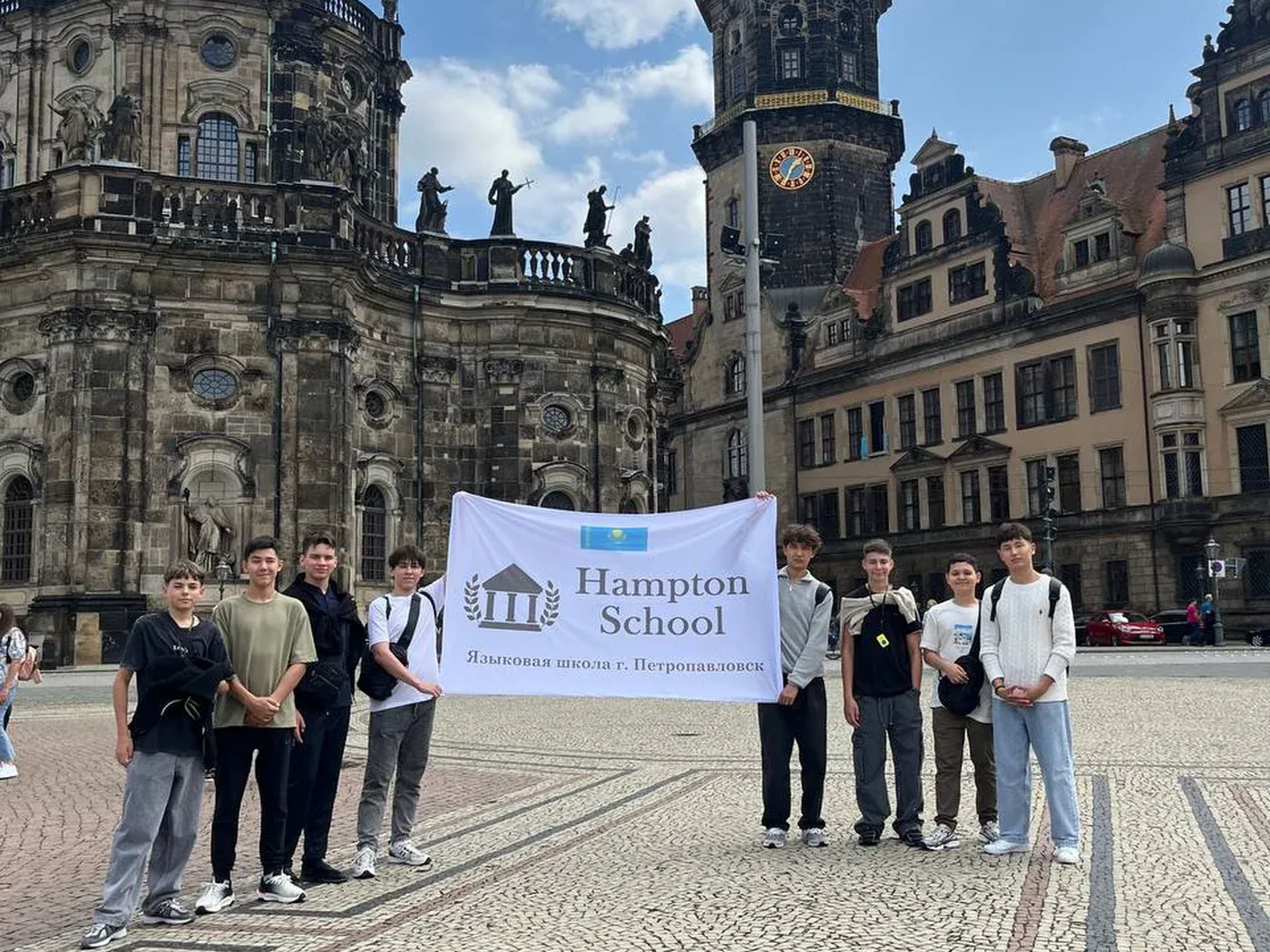
A language camp in Europe combines lessons, life in a group of peers and excursions to several countries. Before applying, parents of a 12–18-year-old need to understand two things: whether this format suits their child and what the whole trip will cost.
Since summer 2024 Hampton School has sent 118 students abroad. Below is everything in order, using our summer language holidays in Europe as an example: how to choose a program, what the price includes, how the Schengen visa works, what the trip costs and how safety is organized.
How to choose a language camp in Europe
Start not with the price but with what your child will get from the trip besides a holiday. Once the goal is clear, programs from different organizers are easy to compare using the same questions.
Why Europe
An educational trip to Europe works differently from a holiday. For two or three weeks your child hears and uses the language in class, in the group and around the city, not just in a textbook, and gets used to managing on their own.
Another plus is the universities. In Prague the group visits Charles University and the Czech Technical University: children see how students live and study in Europe, and studying abroad stops feeling far away.
Europe is a common choice for a first trip without parents: the destination is familiar, and one Schengen visa covers several countries. If you are already thinking about university, take a look at our study abroad program.
What to ask the organizer
These questions work for any program, and the answers show the difference straight away.
- Group age. Teenagers feel more comfortable among peers, so check which age the program is designed for.
- Language, hours and certificate. How many academic hours of lessons, how many excursions and what your child gets at the end.
- Placement test and level groups. Without level groups, weaker students struggle and stronger ones get bored.
- Accommodation and meals. Where the children live and which meals are already paid for.
- Supervision. Who travels with the group and how many children there are per adult.
- What the price covers. What is included and what you will have to pay for separately.
- Visa and staying in touch. Who handles the visa and how parents get news about their child.
How the lessons and program work
Lessons and language level
The language is chosen in advance: English, Czech or German. The two-week program is 40 academic hours, the three-week one 60, and at the end your child receives a certificate.
A high level is not required: at the start of the program children take a test and join a group at their level, so they can go with a basic knowledge. You can check your child's English level beforehand with our online test. The programs bring together young people from different CIS countries, and they speak English with each other.
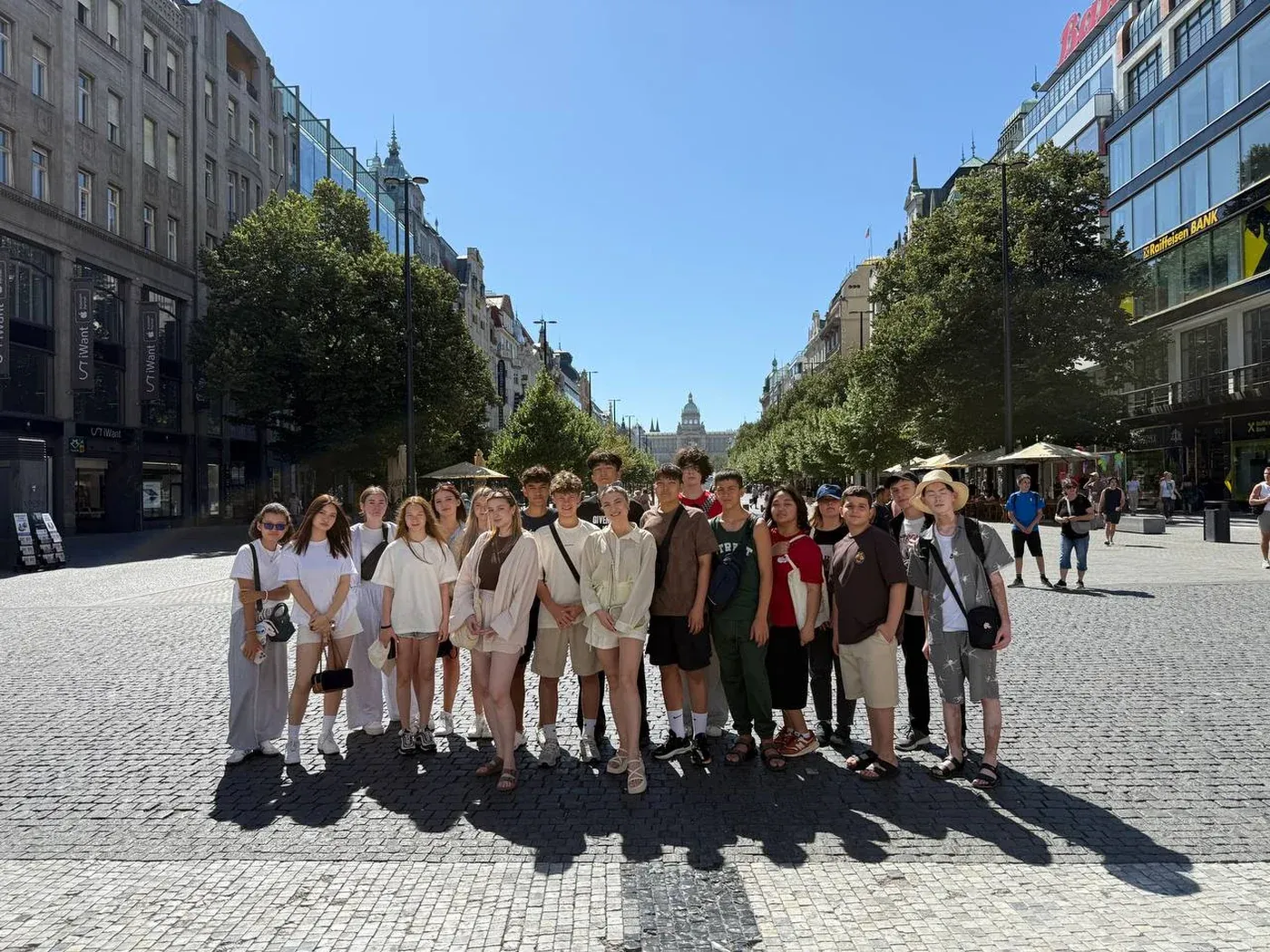
A camp in Czechia and trips to neighboring countries
The group lives in a residence on a campus in Czechia. In effect it is a camp in Czechia for teenagers, from which the group goes on excursions to neighboring countries. All excursions are included in the price.
In Prague — Charles Bridge, Prague Castle, Letná Park, a quest at Vyšehrad and the university visits. In Vienna — Schönbrunn Palace, St. Stephen's Cathedral, the historic center and places linked to Mozart. In Dresden — the Old Town and a walk along the Elbe. In one program your child sees three countries: Czechia, Austria and Germany.
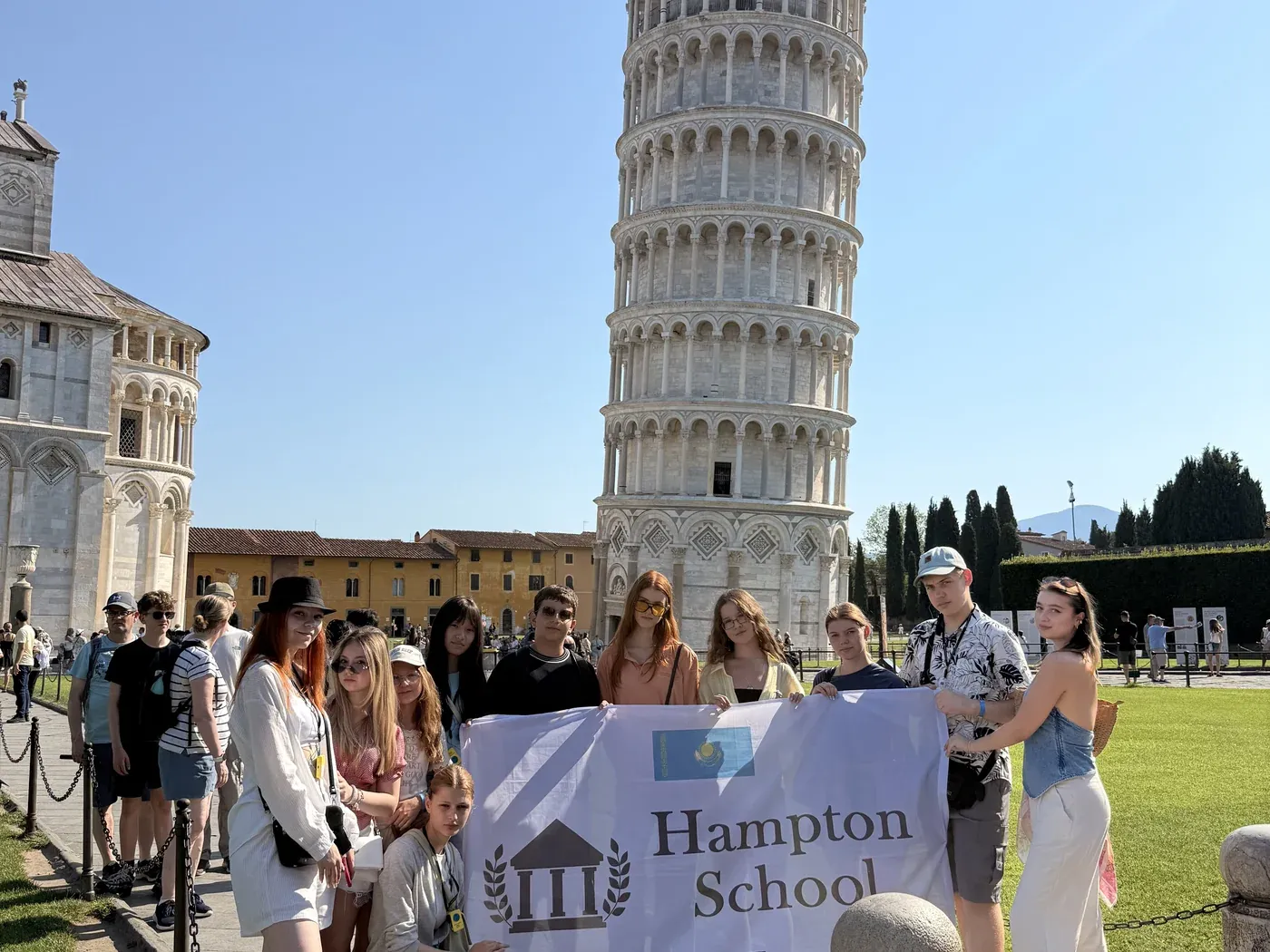
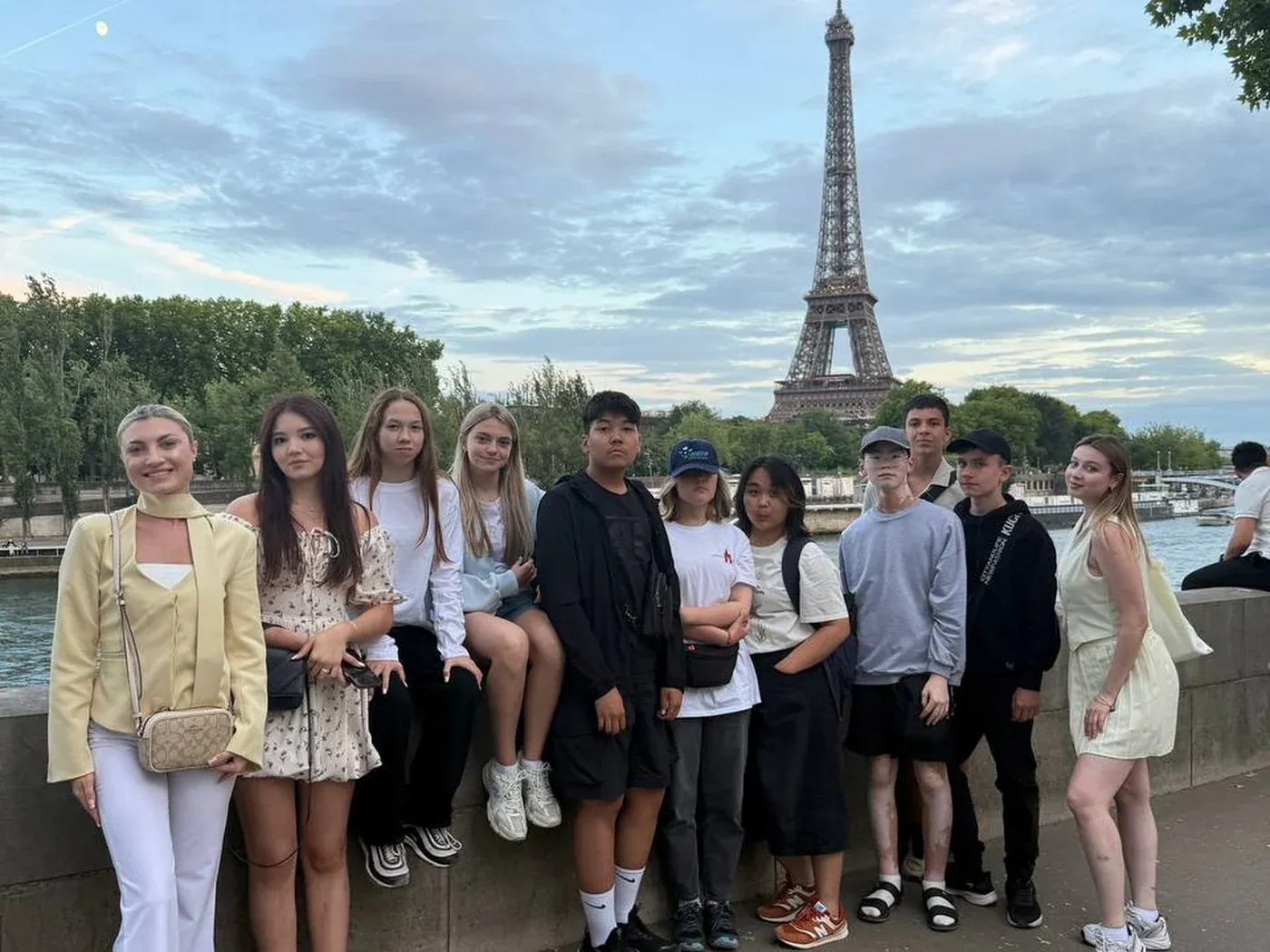
Optional extra trips are available at extra cost: Paris with a full day at Disneyland, Switzerland (the Rhine Falls, Zurich, Bern and Liechtenstein) and Italy (Florence, Pisa, Venice).
What the price includes and what is paid separately
The program price covers almost everything that happens on site. Flights, extra trips and pocket money come on top.
| Included in the price | Details |
|---|---|
| Accommodation | A residence on a campus in Czechia |
| Meals | Breakfast and dinner |
| Lessons and certificate | 40 academic hours in two weeks, 60 in three |
| Excursions | Czechia, Austria, Germany |
| Activities and transfers | Daily activities, travel between cities and within the program |
| Visa and invitation | Handled with the school's visa consultant |
| Medical insurance | — |
| Supervision | Hampton School group leader around the clock |
| SIM card and registration fee | Every child gets a SIM card to stay in touch |
Documents and a Schengen visa for a student
The trip requires a Schengen visa. The visa application and the official invitation are included in the program price. You gather the documents together with the school's visa consultant, who will tell you what your child needs and handles the visa until it is issued.
A Schengen visa is usually issued within one to two weeks. This is a guide based on our groups' experience, not a guaranteed timeframe, so it is best to start right after booking: enrollment usually closes a month to a month and a half before the trip.
What the whole trip costs
The program price is €2,800; on the website it is listed for a 2–3-week program. The amount in tenge depends on the exchange rate; see the Europe page for the price at the school's current rate.
On top of that come flights — 250–400 thousand tenge for our groups — and pocket money: 6–10 thousand tenge a day is enough in Czechia, while France and Switzerland need more.
Safety and staying in touch with your child
Who travels with the group
The children travel with Hampton School teachers who have a teaching degree and experience working with children. There is one chaperone for every 10 participants, and they are with the group around the clock. Passports and important documents are kept by the chaperone during the trip, and medical insurance is included in the price.
How parents know everything is fine
Every child has a SIM card and a local connection, so they can call home themselves. On top of that, the group's parents share a chat where every day we post how the day went, with photos and videos. All photos from the trip are uploaded to Google Drive.
How to sign up for language holidays in Europe
An early booking discount applies until New Year, so it is better not to put off the decision. Then it goes step by step.
Choose the language — English, Czech or German — and the length: two or three weeks.
Apply on the Europe page or get in touch with the school via contacts.
Make a prepayment to secure the place.
Gather the documents with the school's visa consultant and wait for the visa.
Sort out the flights: they are paid separately.
Other language holidays abroad — China, the UK, the USA — are collected in a separate section of the website.
The full Europe program and how to apply →
We will find a program for your child
We will tell you about destinations, dates and prices. The consultation is free.
Read also


Book a trial lesson
A free trial lesson with a professional teacher. We will assess your level and choose a program.